🧁 Ingredient Science · 5 min read
How Baking Powder Actually Works
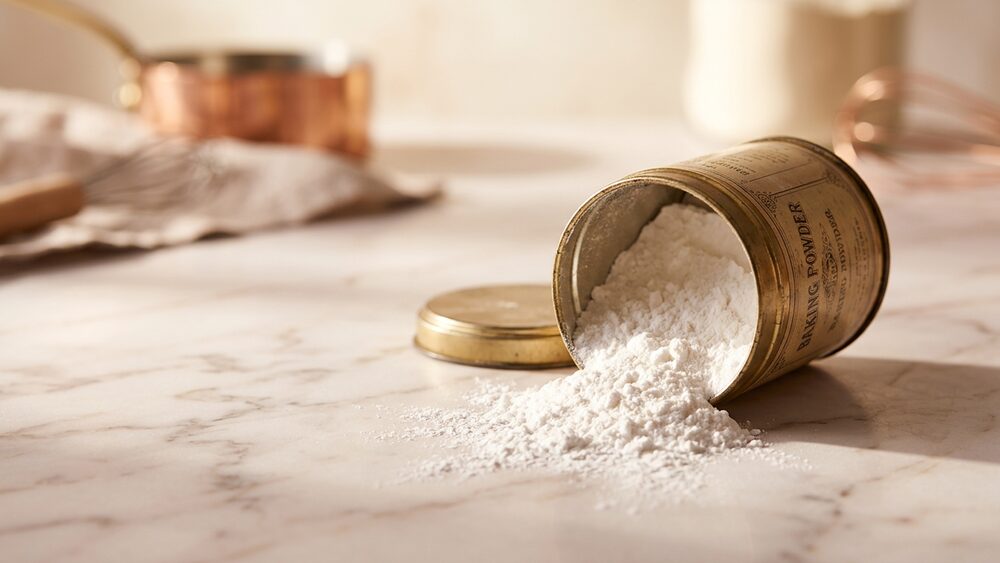
Baking powder looks like a single ingredient. It's actually a small chemistry kit: baking soda, a powdered acid, and a buffer to keep the two apart until you add liquid.
 by Alejandro, PastryPath · Updated July 2026
Baking soda needs an acid from somewhere else in the recipe — buttermilk, brown sugar, cocoa, yogurt — to do anything. Baking powder solves that problem by packing its own acid right into the can, which is why it works in recipes that have no acidic ingredients at all, like a plain vanilla cake.
What's actually in the can
Standard baking powder is a mix of baking soda (sodium bicarbonate), one or more powdered acids (commonly cream of tartar, sodium aluminum sulfate, or monocalcium phosphate), and corn starch as a buffer to absorb moisture and keep the soda and acid from reacting prematurely inside the can.
Single-acting vs. double-acting
Most baking powder sold today is double-acting, meaning it releases gas in two separate stages: a small first reaction as soon as it hits liquid at room temperature, and a second, larger reaction once it hits oven heat. That two-stage release is what gives batters some working time before they need to go in the oven — a single-acting powder reacts almost entirely on contact with liquid, so it needs to be baked immediately or it loses its lift.
The ratio bakers actually use
The standard starting point in American baking is about 1 teaspoon of baking powder per 1 cup of flour. Recipes that lean richer or heavier — more butter, more egg, denser mix-ins — sometimes push slightly higher because there's more weight for the leavening to lift.
Why "just add more" doesn't work: too much baking powder doesn't just over-lift a bake, it can make it collapse — the batter rises fast, overexpands past what the structure can hold, and then caves in as it cools. Excess baking powder also leaves a distinctly bitter, metallic aftertaste, since you're now tasting unreacted chemical leavening rather than just its gas.
How to keep it working
Baking powder loses potency over time, especially once opened and exposed to humidity. A quick freshness test: drop a spoonful into hot water — vigorous, immediate bubbling means it's still active; a weak or delayed fizz means it's time to replace the can, even if the expiration date hasn't technically passed yet.