🍬 Ingredient Science · 6 min read
What Sugar Actually Does in Baking
Sugar's job title should really be "structural engineer," not "sweetener." By the time you taste sweetness, sugar has already changed the texture, color, and shelf life of whatever you baked.
 by Alejandro, PastryPath · Updated July 2026
Ask most home bakers what sugar does and you'll get one answer: it makes things sweet. Ask a pastry chef and you'll get a much longer list — because sugar is doing at least four separate jobs in almost every batter, and only one of them is flavor.
The four jobs sugar is actually doing
Moisture retention. Sugar is hygroscopic — it grabs and holds onto water. That's why a cake with less sugar than the recipe calls for often turns out drier, not just less sweet. It's also why sugar-heavy baked goods like brownies stay soft for days while low-sugar ones stale faster.
Tenderness. Sugar competes with flour for the water in a batter, which slows down gluten development. Less gluten development means a more tender, finer crumb. This is part of why creaming butter and sugar together — rather than dumping sugar in with the dry ingredients — makes such a visible difference in cake texture.
Color and flavor development. Sugar drives both caramelization (sugar browning on its own under heat) and the Maillard reaction (sugar and protein browning together). That golden-brown crust on a cookie edge is sugar doing chemistry, not just melting.
Structure — in the way you might not expect. In whipped applications like meringue and some buttercreams, sugar actually stabilizes air bubbles and prevents egg proteins from over-coagulating too quickly, which is part of why meringue-based buttercreams call for very specific sugar-to-egg-white ratios rather than "sugar to taste."
The ratio bakers actually think in
There's no single universal sugar ratio the way there is for water in bread dough, because sugar's role shifts by category. But a few reference points are worth knowing:
| Baked good | Typical sugar : flour ratio (by weight) |
|---|
| Lean bread | 0–5% |
| Layer cake | ~90–110% |
| Classic pound cake | ~100% (equal to flour, butter, and eggs) |
| Drop cookies | ~50–75% |
| Shortbread | ~25–35% |
A cake or cookie with sugar at or above the flour weight is sometimes called a "high-ratio" formula — and it needs emulsified fats and enough liquid to dissolve all that sugar, or the texture turns gritty and the crumb collapses.
The mistake this explains: cutting sugar "to make it healthier" without adjusting anything else. Because sugar is load-bearing for moisture and tenderness, pulling it out without adding back liquid or fat usually produces a drier, tougher bake — not just a less sweet one.
How to work with it
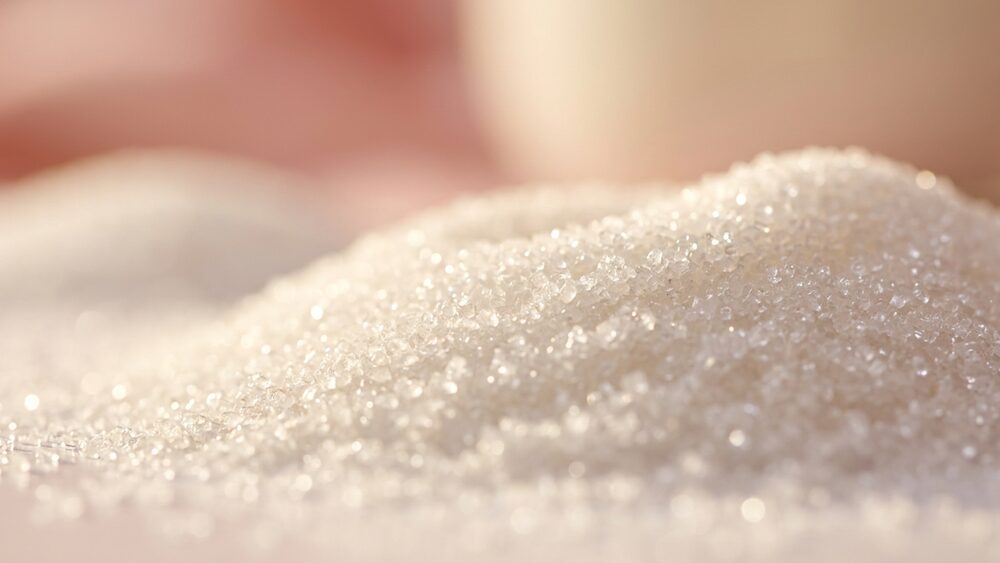
Granulated sugar's crystal size matters more than most recipes let on. Coarser sugar creams less efficiently into butter, trapping less air — which is part of why cookies made with coarse sugar spread differently than ones made with fine caster sugar. If a buttercream tastes gritty, it's very often undissolved sugar, not a flavor problem — that's exactly why meringue-based buttercreams heat the sugar until it fully dissolves before whipping.