🎀 Ingredient Science · 6 min read
Fondant vs. Buttercream
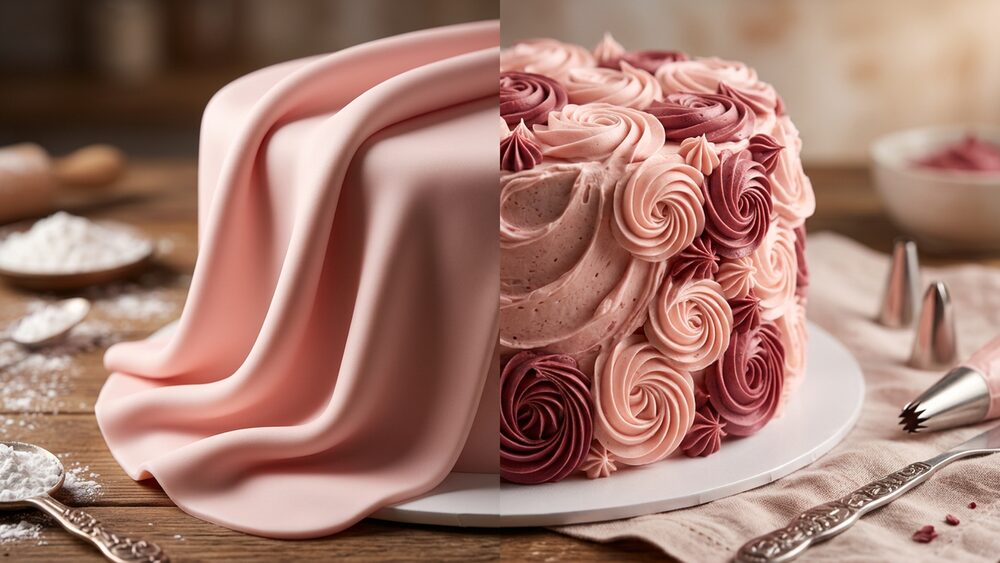
The two get lumped together as "cake covering," but they're built from almost nothing in common. One is a whipped emulsion of fat and sugar. The other is closer to a pliable candy dough.
 by Alejandro, PastryPath · Updated July 2026
If you've only ever worked with buttercream, fondant can feel like a completely different craft the first time you touch it — because structurally, it is. Buttercream is whipped fat and sugar with air folded in. Fondant is a smooth, elastic sugar dough that gets rolled flat and draped over a cake like fabric.
What rolled fondant is actually made of
At its core, classic rolled fondant is a mix of powdered sugar, glucose syrup or corn syrup, water, and a gelling agent — usually gelatin. The glucose syrup prevents the sugar from crystallizing back into a grainy texture, and the gelatin gives it enough elasticity to stretch and drape without tearing. Glycerin is often added to keep it soft and pliable rather than hardening into a shell too quickly once it's exposed to air.
Why they behave so differently
| Buttercream | Fondant |
|---|
| Structure | Whipped emulsion (fat + air + sugar) | Pliable sugar dough (no fat, no whipping) |
| Finish | Soft, can be textured or smoothed | Smooth, matte, almost fabric-like |
| Heat tolerance | Melts or softens in heat (varies by type) | Much more heat-stable |
| Taste profile | Rich, buttery, varies by type | Very sweet, mild flavor, often called "too sweet" on its own |
| Best for | Piping, texture, rustic or naked finishes | Sharp edges, sculptural shapes, smooth solid color |
Why most professional cakes use both: a thin layer of buttercream goes on first as a crumb coat and adhesive base, and fondant goes over the top for the smooth, sharp-edged finish. Fondant on its own doesn't stick well to bare cake, and buttercream on its own can't achieve fondant's perfectly flat, matte surface — so pastry chefs often use each material for the job it's actually good at, rather than picking one exclusively.
Working with it
Fondant is temperature- and humidity-sensitive in the opposite direction from buttercream: it gets sticky and slack in heat and humidity, and stiff and prone to cracking in dry, cool conditions. Kneading it briefly with a small amount of vegetable shortening on your hands (not water — water will make it gummy) is the standard fix for both over-dry and slightly-too-firm fondant.
Rolling it evenly matters more than most people expect: fondant rolled unevenly will show every thickness variation as a visible ripple once it's draped over a cake, since it has no fat content to self-level the way buttercream can.